The Indonesia You See is Not the Same as What They See
“The most precious moment in life is to meet new people.”
Achmad Prawira Singawinata
Diterbitkan pada 5 Agustus 2026
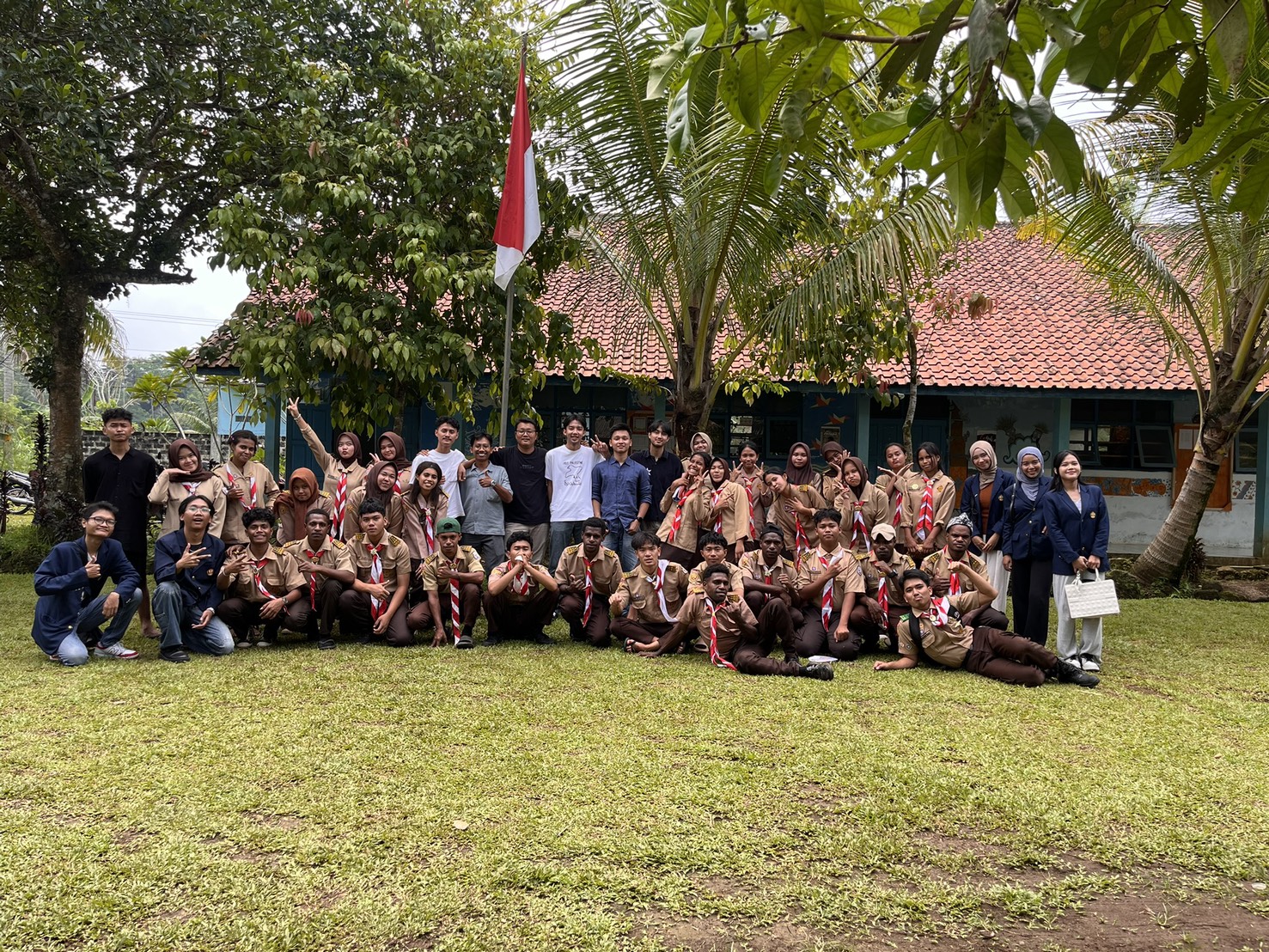
My Eyes
I spent most of my years of education in Jakarta, where I interacted with tons of people with different lifestyles and socioeconomic backgrounds. The thing with living in a metropolitan area is that you get to observe all the ebbs and flows of society. Just by looking at what kind of transportation they ride to school, whether they do bimbingan belajar (cram school) or not, or what kind of technology they use at school, these little things that shape their habit in living will develop our understanding of how harsh it is to accept and acknowledge that there is a social discrepancy that I used to think that it was normal and that is just the way the world works. It is not.
I began to question my whole understanding of education when I visited a small region called Pangandaran, where there is a school filled not just with people from Java, but with kids from far west Aceh to far east Papua. These kids were sent by their parents to pursue the education they deserve, since the place where they came from could not provide one. All the kids gathered in a small environment, yet I can feel their dreams are so big, and it feels like a slap to my face because I realized that I have taken everything for granted in the city for my whole life. This small school made me feel like a foreigner in my own hometown because with all the access to information I have, I somehow do not know anything about what is happening outside of the city. Indonesia is not just about Java or Bali. Indonesia is also about Sumatra, Nusa Tenggara, Kalimantan, Sulawesi, Maluku, Papua, and all of the places where their stories need to be heard, and it is our job to spread them. From stories to movements, from practices to knowledges, from communities to change, that is how the school represents itself as the catalyst for equal educational opportunity for Indonesian youths.
Their Eyes
Located on the southern coast of West Java, SMK Bakti Karya is a formal vocational education institution with the vision to grow in harmony with the diversity of nature, culture, and technology, through an integrated learning approach that encompasses ecology, humanities, and media. SMK Bakti Karya perceives heterogeneity as an essential concept and a place where students from different backgrounds can be blended and learn through many perspectives without undermining one another. The school mainly consists of students from so-called Frontier, Outermost, and Underdeveloped regions (Terdepan, Terluar, Tertinggal). Therefore, the idea of diversity in this context is not just about culture, but also about how people from different socioeconomic backgrounds are a crucial aspect for students to learn how other people speak, learn, walk, eat, and behave the way they do without judging.
Looking at Indonesia, with over 1,300 ethnic groups spread across its 350 million population, it is highly prone to ethnic-related conflict, which potentially produces chauvinism within the nation’s plural society. Conflict mainly occurred because the people did not know about each other directly; they were only exposed to the social media interpretation of some ethnic groups—the stigma and stereotyping—and they absorbed it as a fact or reality of it. This is exactly why the school is built for. The moment the kids meet someone whose world they had assumed they already understood through the media, it will break their pre-existing beliefs piece by piece as they begin to grasp a fresh view of them. Like a blank piece of paper, it lets the ink write the memory itself to reshape their thinking. SMK Bakti Karya is a prominent platform as a base of actualization of Bhinneka Tunggal Ika (Unity in Diversity) and Pancasila to maintain national resilience from any kind of threats, externally or internally. Therefore, a small act such as gathering all the kids from different socioeconomic backgrounds is critically important not just to understand each other, but also to manage how these kids can cooperate and live in harmony despite the differences. Imagine if we can establish more SMK Bakti Karya in more regions; I will strongly believe that we will have a more cohesive society, and the risk of conflict related to religion or ethnics will go down rapidly.
Our Eyes Now
Looking at Indonesia’s condition now, we can tell that people are on the edge of despair because of the uncertain trajectory of their lives. If Leila Chudori in her “Malam Bercerita” book wrote about how the victims of the 1998 Indonesian crisis were just seen as statistics, Jaleswari Pramodhawardani (the head of Laboratorium Indonesia 2045) deliberately shows how the government did not count the number of deaths and affected people in the conflict area in Papua for some reason. The unawareness posed by the government is not merely due to its lack of capability, but rather what sociologists call strategic ignorance. It is a state of ignorance that is created and perpetuated because it serves a political purpose. Those “invisible victims” are the ones whose stories are buried deeply and we are responsible for digging them up and letting the world know that every life matters.
The moment when the government shows signs of overlooking its people, that is the moment when we need to fill the gap to advocate for society, because some people need further help from us. If it is not us, then who will? Filling that gap does not require grand gestures. It can start with small, deliberate acts of remembering such as writing down a name the state refused to record, sharing a testimony before it disappears into silence, or simply asking the question those in power hoped no one would ask. Because in the end, the fight against strategic ignorance is not fought with weapons, but with memory. And as long as there is someone willing to write, to speak, and to listen, the invisible victims of Papua, like the forgotten names of 1998, will remain unerased from history.
Achmad Prawira Singawinata is an International Relations student at Tokyo International University and Executive Director of Unlocking Nusantara, where he leads educational and scholarship programs for students from conflict-affected areas. He’s also active in student leadership, event management, and sports coaching, driven by a passion for cross-cultural connection and community impact.