Balancing Reign of Power and National Ethics; The Questioning of Indonesia’s Moral Principles amidst a New Era
Kanto Opinion And Academia Column
Isabelle Teresa Lensun
Diterbitkan pada 17 Maret 2026
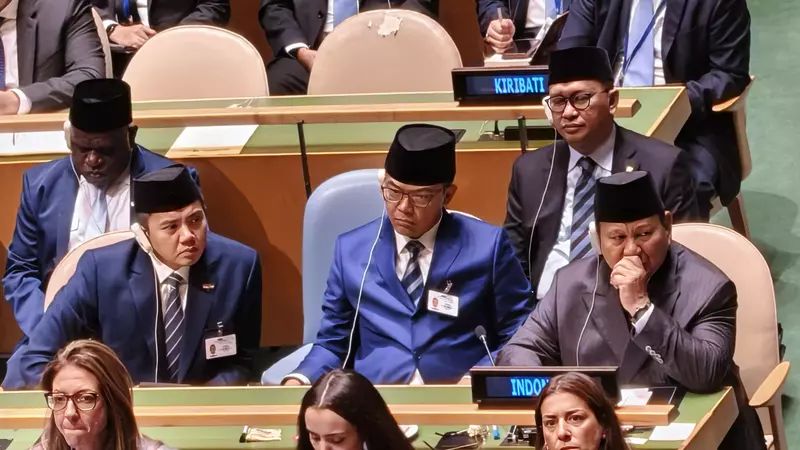
Entering his second year of presidency, Prabowo Subianto’s approach and future outlook has sparked numerous debates regarding Indonesia’s direction of foreign policy and presence in the global stage. The altercation of Prabowo’s neorealist approach has brought Indonesia into a new trajectory as a middle power. From attaining presidency of the United Nations Human Rights Council, to engaging with Donald Trump’s Board of Peace, Prabowo’s advancements and ambition attempts to manage multilateralism within the global stage all while maintaining domestic commitments. Yet, with Indonesia having a greater medium for utilising strategic power, this then poses the question of Prabowo’s commitments to maintaining moral alignment and preservation of human rights amidst plans of international engagement.
With plans to prosper Indonesia’s future, his priorities become evident—to strengthen Indonesia’s role in international affairs. It’s undoubtedly acknowledged that with the president’s military background and firm position on national security, Prabowo’s leadership demonstrates a pivotal turning point on Indonesia’s foreign policy going forward. Echoing words by the Human Rights Minister, Natalius Pigai, during his visit at the Indonesian Embassy in Tokyo with members of the Indonesian community, he further highlights Prabowo’s pursuit of a realist approach: believing that Indonesia’s interest may be strengthened through active political ideologies — allowing the reinforcement of mental resilience and readiness.
Analyzed through a neorealist lens, Prabowo’s foreign policy aligns with the foundation of balancing strategies that seek states to maximize their own security whilst maintaining its free and active tradition. According to Kenneth Waltz, an American political scientist, he affirms that states moderate their pursuit of power for survival to maintain the status quo—henceforth, it becomes evident that Indonesia’s involvement between major powerhouses are adopted to avoid vulnerability and enhance the nation’s international standing. Through initiatives in navigating interests of influential power states such as China and the United States, as well as partnership talks of military accords separately with Russia and France, Prabowo’s efforts and recent executions underscores his neorealist’s approach in diversifying Indonesia’s presence and affiliation amidst foreign actors.
Such a neorealist approach becomes critical in understanding how the international world churns great-power politics that’ll shape the future of our society, as we currently are seeing a downfall of multilateralism. While power states have reigned dominance over multilateral systems, the current political climate adds further a diverse set of actors. Having both the United Nations and intergovernmental organizations seemingly fatally blocked in times of crisis, the cohesion of international politics remains unstructured—and often, disruptive. Therefore, this gives middle powers—such as Indonesia, a role in systematically reviving global multilateralism. Seeing the world through Prabowo’s realist lens, his framework and decision makes grounds for believing that Indonesia’s newfound involvement may provide prospects for global stability. Though a sliver of realism may be warranted in hopes of potentially advancing international cooperation, given the current political state of the world, it’s imperative to remember that an approach by middle powers must have the capability of enforcing strategic balance amidst mixed motives and hidden self-interest.
The attempts of integrating multilateralism as a middle power can be seen executed earlier this year, with Indonesia given the privilege to be elected with the presidency of the United Nations Human Rights Council as an acknowledgement of its ability to morally lead a platform of human rights. However, Prabowo’s efforts to strategically place Indonesia at the outreach of dominant power with its presidency raises concerns on the administration’s deliberate strategic motive, particularly of status play to wager institutional influence. As such a position allows Indonesia a medium to instead manage multilateral politics rather than hedging human rights outcomes. While the mandate of the presidency primarily acts to be procedural and facilitative, the president has the principal responsibility—as well as influence, to vocalize human rights activities globally. However, for a country without a dominant reach of power, institutional authority becomes a calculated pathway to be maximized, as it orchestrates the environment where outcomes of global diplomacy are created.
Yet, while Indonesia’s presidency in the global stage showcases its moral obligations, human rights affairs on a domestic level remains continuously contested. Whether it be through a new criminal code taking effect or the restriction of expression by rights advocates, domestic controversies that frequently arise become reference points on Prabowo’s true motive. With a newfound spotlight by the public, Indonesia’s domestic human rights practices become a glimpse of whether its international role and credibility in the Human Rights Council may be perceived as truly authentic—or merely an act.
Following the shift in a new leadership approach, recent events shedding a light toward Donald Trump’s Board of Peace and Indonesia’s decision to engage with his multinational stabilization force for Gaza further triggers more alarms towards the public in understanding Prabowo’s decision. One may argue that his means of support reflect a neorealist approach and compromise with the only power state capable of moving the needle towards enforcing a peace deal, given the United States’ position to constantly divert substantive change towards affairs in the middle east. However, widespread scrutiny continues to grow as Indonesia’s decades-long effort to strengthen its philosophical foundations of diplomacy and position itself as a mediator clashes with the president’s newfound strategic decision. Drawing the nation towards a politically sensitive human rights dilemma that leads to both constitutional and moral tension.
With that being said, in our current political reality where countries attempt to use state power to cooperate in advancing multilateralism all while maintaining their own future stability, one’s collective security and shared beliefs with others become a long-standing interest for middle-power states like Indonesia. Furthermore, taking consideration of Prabowo’s realist approach and Indonesia’s speculated motive in the Human Rights Council, it becomes increasingly vital to carefully navigate the country’s position as a stable, influential player. Prabowo’s foundation of strategies for Indonesia both offers opportunities and risks for the credibility of human rights protection, particularly amidst managing its domestic commitments alongside the nation’s newfound significant presence on international forums. Ultimately, the president’s credibility and commitment to ensuring a prosperous future for Indonesia lies in the ability to finding a medium between maintaining peace and moral alignment; if Indonesia will be able to simultaneously preserve its attempt of survival in such cutthroat political environment all while as abiding to moral foundations pioneered by the UN Charters.
Isabelle Teresa Lensun is a 1st year International Relations student at Tokyo International University. She currently serves as the Head of Academics Division at PPI Korda Kanto.